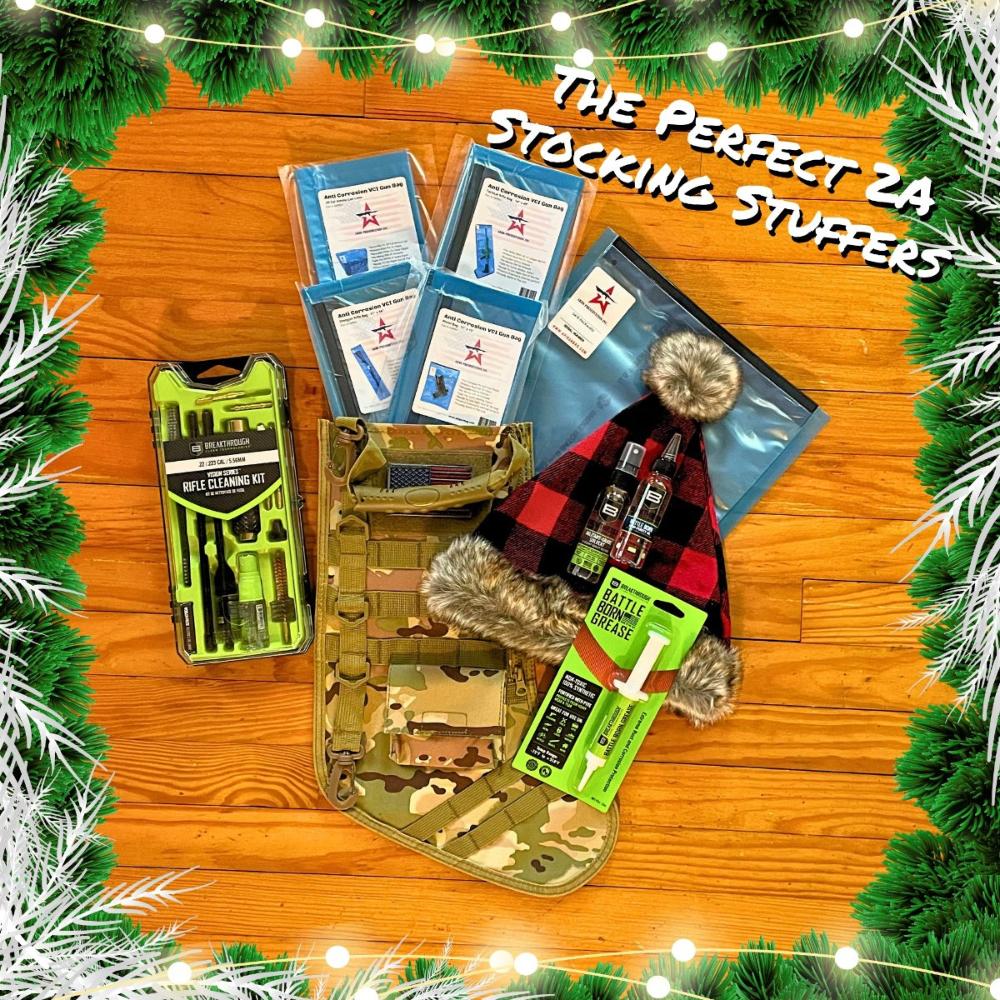
Industrial VCI Barrier Bags for Metal Parts & Storage

Industrial VCI bags from Arms Preservation Inc. (API) help protect ferrous and non-ferrous metal parts from corrosion during manufacturing, warehousing, maintenance, and shipment. API combines an inner Vapor Corrosion Inhibitor (VCI) film with a separate moisture-barrier outer layer in a reusable or heat-sealable bag configuration.
Explore corrosion-prevention packaging for machined parts, precision tooling, rare earth magnet assemblies, spare parts, and defense or aerospace equipment. Compare transparent and foil barrier options, review existing stock sizes, or request a bulk or custom industrial VCI packaging quote.
Find the information you need:
How the bags work | Compare barriers | Applications | Sizes & closures | Request a quote
How API Multi-Layer Industrial VCI Bags Work
Unlike a single-layer VCI polyethylene bag, API's standard multi-layer construction gives corrosion inhibition and moisture-barrier protection separate jobs:
- Inside: 4 mil Cortec VpCI-126 MIL film. The inner film releases vapor-phase corrosion inhibitors into the enclosed air space to help protect compatible ferrous and non-ferrous metals, including areas that are difficult to reach with wipe-on coatings.
- Outside: 4 mil protective barrier material. The transparent or foil/ESD outer layer reduces the movement of water vapor into the package and helps retain the protective VCI environment.
- Total nominal construction: 8 mil. Reusable hook-and-loop and open-mouth, heat-sealable configurations are available depending on the application and order requirements.
For suitable clean, dry parts, VCI packaging can reduce reliance on heavy oil or grease coatings and the cleaning required before reuse. Proper preparation, closure integrity, and storage conditions are still essential. Learn how vapor corrosion inhibitors work.
Transparent vs. Foil / ESD Industrial VCI Barrier Bags
The outer barrier is selected for the preservation environment, the contents, and any contract requirements. Both options use a VCI inner layer, but provide different moisture-barrier and identification capabilities.
| Feature | Transparent barrier | Foil / ESD barrier |
|---|---|---|
| Referenced outer material | MIL-PRF-22191F Type 1 | MIL-PRF-81705E Type 1 |
| API-published outer-material MVTR* | 0.010 g/100 in²/day | 0.0005 g/100 in²/day |
| API-published puncture-force value* | 21 lb | 19 lb |
| Visibility | Contents visible without opening | Opaque barrier; exterior identification may be needed |
| Primary benefit | Low moisture transmission with visual inventory checks | Lower moisture transmission; options for specified static-sensitive applications |
| Typical applications | Indoor storage, tool cribs, work-in-process, domestic distribution | Demanding environments, long-term holds, electronics, export and coastal storage |
*MVTR = moisture vapor transmission rate, a measure of water vapor passing through a material. API's published outer-barrier MVTR values are reported at 90% relative humidity and 104°F (40°C); the puncture figures are reported under MIL-STD-3010 test methods. These are material reference values, not guaranteed performance of every completed package. Comparisons to competing films should use identical test conditions and methods.
The stated foil barrier MVTR is approximately 20 times lower than API's transparent barrier figure at those reported conditions. Actual preservation performance also depends on the part, seal, handling, and storage environment.

Which industrial VCI barrier should you choose?
Choose transparent when inventory visibility, repeated inspections, and routine indoor preservation are important. Evaluate foil/ESD for more demanding humidity exposure, long-term storage, or programs with specified static-control needs. Neither option should be selected solely by an MVTR number without reviewing the complete packaging specification.
Industrial Corrosion-Protection Applications
Precision Tools, Fixtures and Measuring Equipment
Protect cutting tools, carbide tooling, taps, reamers, end mills, molds, dies, gauges, and spare fixtures between uses. For tool cribs and inspection inventories, a transparent bag with a reusable closure can help keep items identifiable without frequent re-packing.
Bearings, Gears, Machined Parts and Raw Stock
Finished steel components, bearings, gear teeth, shafts, rails, tubing, and machined assemblies can develop surface corrosion during staging or storage. VCI packaging helps protect compatible surfaces while the outer barrier reduces moisture exposure. For oversized lengths or awkward profiles, request a custom bag evaluation.
Rare Earth Magnets and Corrosion-Sensitive Materials
Uncoated or damaged-coating NdFeB magnets, magnet blanks, and certain rare earth alloys may be sensitive to humidity and corrosion. Barrier packaging can be evaluated for suitable assemblies, but the correct method depends on alloy, coating, cleanliness, and exposure conditions. Some highly reactive rare earth metals require specialized inert-atmosphere or other handling methods; an ordinary VCI bag is not a substitute. Validate compatibility and preservation results before full-scale use.
Spare Parts, MRO Inventory and Work-in-Process
Maintenance, repair and operations (MRO) teams often keep valves, fittings, hardware, and replacement assemblies in storage for extended periods. Manufacturing teams may also need interim protection between machining, inspection, finishing, and assembly. Reusable VCI bags can reduce repeated oiling and handling for suitable items, while heat-sealable packages may be preferable when a controlled seal is required.
Electronic Assemblies, Sensors and Connectors
Some components require both corrosion protection for metal contacts and specific electrostatic discharge (ESD) packaging controls. API's foil/ESD construction may be evaluated for these applications, subject to material and device compatibility, sealing requirements, and any applicable qualification documentation. Confirm package requirements before using VCI materials with sensitive devices or assemblies.
Export Shipping, Defense and Aerospace Storage
Temperature swings, condensation risk, and variable humidity can complicate shipping and long-term storage. API barrier packaging can be specified as part of a preservation process for qualifying components, military equipment, and industrial spares. For contract-controlled packaging, review the governing drawing, preservation method, marking, and closure instructions rather than relying on generic product descriptions.
Industrial VCI Bag Sizes: Stock Products vs. Custom Packaging
Currently Listed API Stock Bag Formats
These are standard catalog formats sold through API's online store. Dimensions are nominal outside bag width × length, not guaranteed interior clearance. Catalog availability can change; a specific item may be temporarily out of stock.
| API part number | Outside size | Format and product link |
|---|---|---|
| FSP001 | 11" × 15" | Transparent VCI Pistol Bag — suitable for some small tools and components |
| FSP001-ESD | 11" × 15" | Foil / ESD Pistol Bag |
| FSP006 | 16" × 14" | VCI Gear Bag — parts, accessories and small assemblies |
| FSP004 | 14" × 36" | Transparent VCI M4 Bag — longer tools or equipment |
| FSP004-ESD | 14" × 36" | Foil / ESD M4 Bag |
| FSP003 | 14" × 49" | Transparent VCI Rifle Bag — rails, shafts and longer assemblies |
| FSP002 | 11" × 54" | Transparent VCI Shotgun / Rifle Bag — long, narrow items |
Stock firearm bag sizes can also be useful for non-firearm parts if the dimensions, material compatibility, and closure fit are appropriate. Use the API Bag Size Guide for dimensional selection, or browse current storage bag products.
Custom Industrial VCI Barrier Bag Sizes
For non-stock packaging, API can review custom sizes, including small-part bags and long-format configurations. Previous industrial capability information described sizes from approximately 2" × 3" through 16" × 66"; this is a custom-quotation range, not a list of sizes held in retail inventory. Manufacturing feasibility, minimum quantities, barrier materials, closure design and delivery lead times are confirmed with each RFQ.
Closure and Sealing Options
- Reusable hook-and-loop: A convenient option for tool cribs, MRO inventories and parts that need periodic access.
- Open-mouth, heat-sealable: Suitable for programs that require a controlled seal, subject to the applicable packing specification and approved sealing process.
For a precise quote, provide part dimensions and weight, sharp edges or protrusions, quantity, material type, required storage duration, barrier preference, closure type, any applicable specifications, and delivery destination.
Protection Life, Testing and Packaging Documentation
API describes a 5–10 year intended protection period for correctly prepared and sealed multi-layer storage bags. This is application-dependent rather than a universal guarantee; service life varies with part cleanliness, environment, bag integrity, handling, and how often the closure is opened.
Relevant material or packaging references can include MIL-PRF-22019 for the inner VCI film, MIL-PRF-22191 for transparent barrier material, and MIL-PRF-81705 for applicable foil/ESD barrier material. Program-specific requirements may also reference MIL-DTL-117, MIL-DTL-22020, MIL-STD-2073-1, and MIL-STD-3010. Use the governing contract and technical documentation to determine what the finished package must meet.
For requested certificates, lot traceability, material data, seal specifications, or qualification evidence, include the requirements with your RFQ. Explore MIL-SPEC VCI packaging standards or our military weapon preservation resources.
Industrial VCI Barrier Packaging Technical Guide
Download API's nine-page technical guide for more on multi-layer construction, moisture vapor transmission, barrier selection, stock sizes, military packaging references and industrial applications.
Download Industrial VCI Technical Guide (PDF)
Free nine-page technical reference · Opens as PDF
Industrial VCI Packaging FAQs
Are VCI storage bags only for firearms?
No. API's multi-layer packaging can also be evaluated for compatible industrial parts, precision tools, raw stock, and mechanical assemblies.
Should I choose transparent or foil VCI packaging?
Choose based on part sensitivity, inspection needs, storage conditions, and specifications. Transparent barriers make visual inspection easier; foil/ESD barriers offer lower published moisture transmission and may serve specified static-sensitive applications.
Are 2" × 3" through 16" × 66" bags kept in stock?
No. The online catalog lists specific standard dimensions above. Non-stock dimensions must be quoted and confirmed for material availability, minimum quantity and manufacturability.
How long will API VCI packaging protect stored parts?
API publishes an intended 5–10 year protection range for properly used multi-layer bags. Actual results depend on the stored item, preparation, barrier and closure, environment, and handling frequency.
Can API support military or aerospace procurement requirements?
API can review supplied preservation specifications and supporting-document needs. Qualified film does not automatically establish compliance of every finished bag configuration; request confirmation for the exact item and contractual requirement.
Request a Bulk or Custom Industrial VCI Packaging Quote
Tell API what you are storing, the quantity and part dimensions, your preferred barrier and closure, the preservation environment, required documentation, and destination. We can review a stock bag or a custom multi-layer packaging configuration.
Request Military & Industrial VCI Packaging Pricing
For individual stock products, shop API VCI storage bags. For packaging terminology, see How VCI Works.